Thursday, July 30, 2009

Ed Miliband in Birmingham


The Secretary of State for Energy and Climate Change was in Birmingham yesterday. In the speech that I heard, he made the following points.
· There is a large proportion of the UK population that are still to be convinced about why there is a fuss. He illustrated this with a short video of interviews taken at random with people in Birmingham yesterday.
· Action is urgently needed now but this is so that things will be OK in 30 years.
· We must stress the positive things that present actions will bring to enhance the quality of life. Eg Renewables will give energy security.
· The Green New Deal will bring job opportunities.
· In cutting down on carbon use it gives us an opportunity to redesign parts of our cities. Eg public transport and Combined heat and Power.
· We must accept that there will be costs.
· We must make the actions as fair as possible. Fuel poverty must be reduced.
· Every onshore wind farm is a battle with the planners and locals. New planning laws may improve this but if we want to survive we have to be more flexible.
· Low carbon economy can be a way out of recession especially for the manufacturing base of the West Midlands.
· He urged campaigners to keep the pressure on the politicians before Copenhagen. Copenhagen will be a struggle as other countries are not as progressive as the UK. He mentioned the tck tck campaign.

Monday, July 20, 2009

Know Your Food ?


At a recent Big Lunch event in one of the parks in Birmingham I was helping on a stall encouraging people to grow their own food. One of our activities aimed at children was a quiz naming fruit and vegetables.

For the vegetables we had a pea pod, a runner bean, an onion, a broad bean, a courgette and a beetroot.
The fruit was cherries, black currant, red currant, gooseberry and rhubarb.

We had numerous young people browse the stall from teenagers to just school age. The result was similar for most of them. They could name the pea and the cherry and virtually nothing else. Parents were a little better but not much. In some cases prompting parents were saying to children “ I give you those every day: you must know”.

How is it that we are so detached from our food that children do not recognise what they are eating? Is it because so few people grow, prepare and cook their own food these days?

The positive side of the event was people did want to know how they could grow their own and the workshop we helped sixty children to sow fun pots of cress and jars of sprouting seeds were very popular.

For those who do want to learn to grow, prepare and cook their own food there are teachers on School of Everything who will help you.

Tuesday, July 14, 2009

Little Things Matter


We have an allotment so need freezer space to keep the surplus until it is needed.
In order to balance the space we have a fridge freezer for everyday use then another small stand alone freezer for when we need the overflow.

Last week I switched on the second freezer and started loading it up. Twenty-four hours later I could hear it still humming away and not seeming to be cutting out at all. I plugged in my energy meter to check this out and sure enough it was running all the time. Could the thermostat have gone wrong I thought? A temperature check showed it was not reaching its proper freezing point.

A further look round found it had been pushed back tight to the wall so the air could not circulate around the coil at the back. Adjusting it so there was room for the warm air to get out solved the problem.

The result of this was I halved the energy consumption by this small action.

I pass on this experience in the hope that others might check their fridges and freezers and be able to reduce their energy consumption and save carbon.

Monday, July 6, 2009

We are Changing


We don’t always notice when things change for the better. A few years ago those who suggested that reducing our need for plastic shopping bags were thought of as cranks.
I have just come back from staying in a small Cumbrian town where the use of plastic bags was obviously disapproved. Each shop we went in asked us if we really needed a bag and this included the chip shop. In most shop windows hessian/ jute bags were available as the alternative. Looking at the locals doing there shopping it was quite noticeable how many had these alternative bags. In the same town they had also taken to Fairtrade in a big way with many of the local shops displaying a Fairtrade logo. Driving into the town I noticed that the town sign had written on it “A Fairtrade Town”.
This only goes to show that things are changing if we only look. If the population of this one town can be so progressive then there is hope for all the others who are hesitating.

Saturday, July 4, 2009

Think of the consequences of your West Midlands Safari Park trip

Like many Brummies are planning to this summer, I visited the West Midlands Safari Park a few weeks ago, but it was in order to see the activities that they had going on for World Environment Day in their own little World Environment Weekend. The event itself was praiseworthy; I saw children using recycled materials and asking questions about it, using a computer to calculate their carbon footprint and learning how to reduce it.

But I couldn’t help but feel that it is slightly hypocritical of the West Midlands Safari Park to promote such environmental care when I saw how many cars there were riding the four-mile route, many with half empty cars but all trips being wholly unnecessary and purely for entertainment. It’s not exactly a step forward for our carbon awareness, is it?

Since returning I have used one my University tutor’s new project Help Me Investigate, a website where people can ask for investigative journalists, to ask for help in calculating the West Midlands Safari Park’s carbon footprint.

As you can see by visiting here, we were not able to get very far! The Press Office refused to tell us how many people visited the park every year, claiming that they do not release this information to the public, which makes me wonder if it is because they are scared of people seeing how much damage the institution does to the environment?

They do have mini busses but when I enquired about them, they said that they do not run every day and that on the Saturday we went, it was running a scheduled three times. So only three times in a busy day did they push to get people out of their cars and into a larger vehicle to reduce the carbon emissions. Obviously it would be a lot better if it there was more of this opportunity and that they pushed for this alternative method by publicised the times of running. Maybe they could offer a discount as an incentive instead of charging more?

So, what I am saying to you is that if you happen to visit the West Midlands Safari Park, I hope that you too don’t turn a blind eye to the massive oxymoron that is a safari park that conserves the environment.

And a big plus point for the mini busses is that they get much closer to the animals, so you will end up with more close ups of whose beautiful white tigers!

Wednesday, June 17, 2009

A Green City


It is easy to think that a green city can only be a pipe dream. This is not true as there are cities in the world that have led when it comes to the environment. Success in greening a city can sometimes be a mixed blessing as more and more people then want to live there which then makes it difficult to keep up the momentum.

I have just returned from seeing Frieburg in the Black Forest in Germany. It claims to be the greenest city in Germany if not in Europe. It’s a city of over 200000 people who have supported the move to green policies from well before most people had even heard of climate change. Some of the things they have done:

  • 70% of the population travel locally by walking, cycling or public transport.
  • Built up a thriving renewable energy business including, solar panels and wind farms
  • The ecologically oriented new district Vauban is a model project. The whole quarter´s construction method follows the main idea of saving energy and space.
  • City centre developed for pedestrians not cars.
  • Green party got 25% vote and voted in a green mayor.
  • Insisted on high energy efficiency in new buildings.
  • 62% of waste is recycled.

Looking at Frieburg shows what can be done if the whole community gets behind an idea. It has become a place that now attracts both people and industry because it is both go ahead and attractive to live.

Can Birmingham do the same?

Tuesday, June 9, 2009

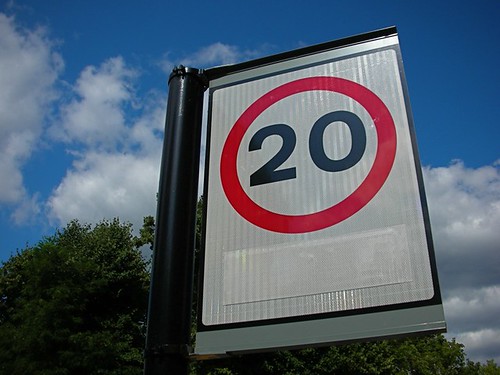
20

Northfield Ecocentre is supporting Friends of the Earth's campaign for a 20mph speed limit in residential areas. Click here to see Joseph Chapman's video on the very good Birmingham Recycled webiste.

LIBERTY, FRATERNITY, EQUALITY...& AVERTING CLIMATE CHAOS

A quote from Chapter 7 of 'The Spirit Level' by Wilkinson & Pickett:

"Because behaviour changes are easier for people who feel in control and in a good emotional state, lessening the burdens of inequality could make an important contribution towards resolving the epidemic of obesity."

Replace the last three words with 'environmental crisis' or 'problem of climate change' and there are some interesting implications:

1) Social change (reducing inequality) is a prerequisite for significant progress on averting climate chaos.
2) People need encouragement and support rather than chastisement and criticism.
3) Building and fostering confidence, skills and resilience in our communities is an important task for the green movement.
By the way, do yourself a favour and READ THIS BOOK - it's profoundly important. Selly Oak library already has a copy and Northfield is getting one. We now have a set of books you can borrow from the Ecocentre, too.